
Castles of Alicante
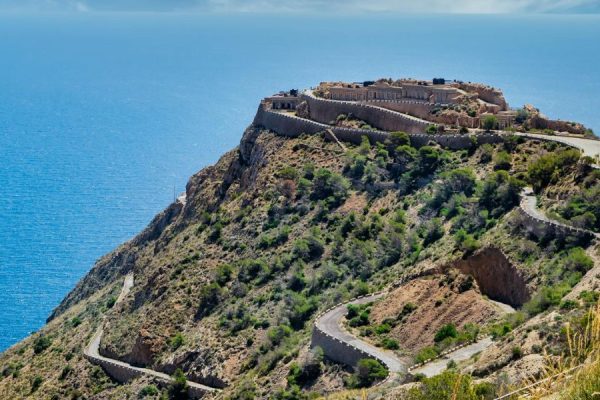
The province offers not only the sea and beaches but also a rich historical heritage in the form of castles and fortresses of Alicante. Many of them are amazing structures that preserve the memory of centuries-old confrontations, underscore the strategic importance of the region, and reflect the cultural influence of its inhabitants across different historical periods (from the Romans to the Christian kings). In this article, we provide practical advice on which castles are worth visiting and what makes each of them attractive.
Historical Background of Alicante Castles: Why There Are So Many
The reason is that the territory of the modern province in the Middle Ages was a site of active military operations and a crossroads of trade routes. Many castles were built between the 9th and 14th centuries and were later modernized under the influence of different eras — from Arab fortifications to Christian defensive structures. However, the main purpose of the castles of Alicante was defensive: they served as reliable strongholds, provided territorial control, and ensured safe trade in the coastal areas of the Mediterranean.
Castles and Fortresses in Alicante Worth Visiting
Santa Bárbara Castle
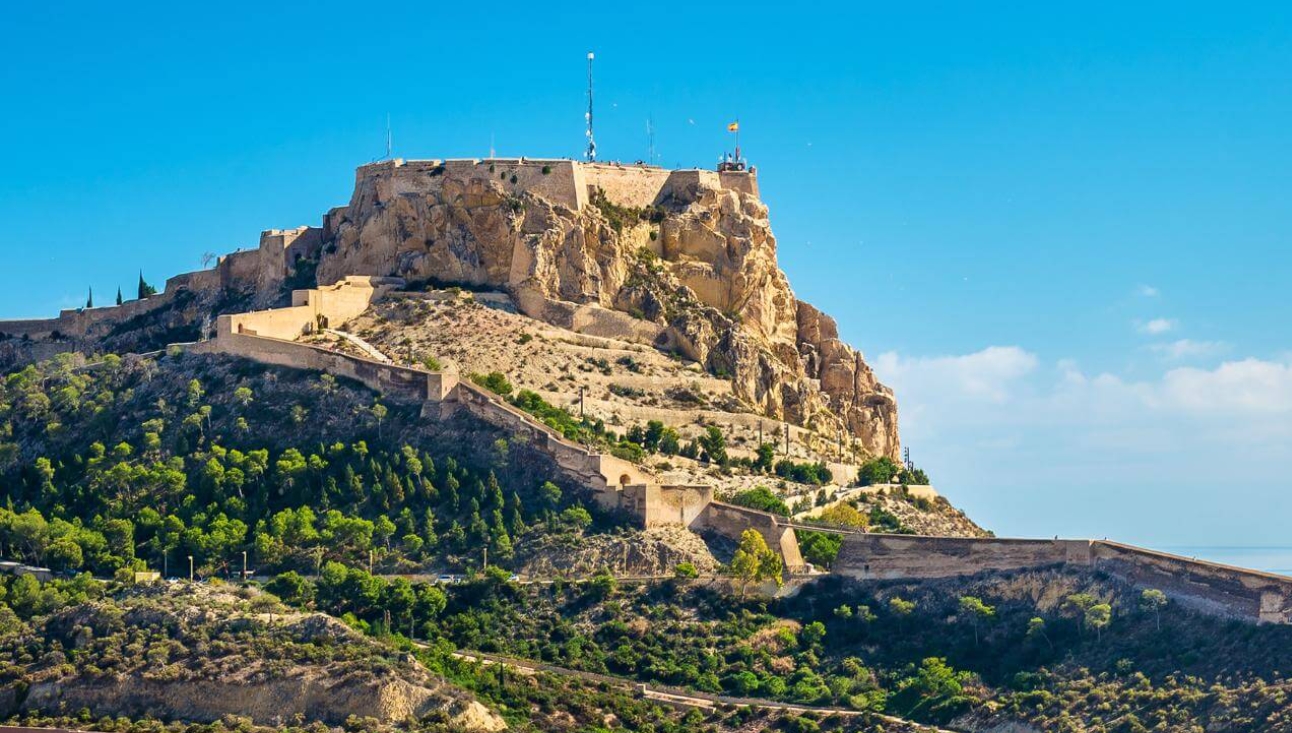
Santa Bárbara Castle in Alicante is, without exaggeration, the main attraction of the region. The castle rises on top of Benacantil Mountain at an altitude of approximately 166 meters above sea level, which once provided enormous strategic advantages for defending the city from invaders. Santa Bárbara Castle in Alicante has a rich history. The first fortifications on the site of the modern castle appeared in the 9th century during Arab rule, after which the fortress was expanded and rebuilt. The structure consists of three zones located at different levels. Each differs in its features and, most importantly, was built in different historical periods. La Torreta is the highest and oldest part, containing the main tower and remains of Islamic-period architecture. The central part dates back to the 16th century and includes the arsenal courtyard, chapel, and queen’s residence. The lower part was built in the 18th century and now serves as a parking area for visitors.
Today, Santa Bárbara Castle in Alicante is not only a historical monument but also a true cultural center hosting regular events, guided tours, and exhibitions. Moreover, its observation decks offer breathtaking views of the city, the port, and the Costa Blanca coastline.
Entry is free. You can reach the castle on foot, by lift, by private car, or by taxi. There is a lift on Avenida Juan Bautista Lafora street, directly opposite Postiguet Beach, which takes visitors up to the castle in seconds. It operates regularly; the cost of the ascent is €2.70 (free for pensioners).
Opening hours: daily from 10:00 to 20:00 (from early October to end of March); from 10:00 to 22:00 (April, May, June, and September); from 10:00 to 23:45 (July and August). Please note that the lift has its own schedule — from 10:00 to 20:00, with the last descent at 19:40. Don’t miss the sunset, or you will have to walk down. Up-to-date information is available on the castle’s official website.
Tip for Alicante.rent apartment guests: Combine your visit to the castle with a walk through the Old Town and lunch at one of the restaurants along the promenade.
Santa Bárbara Castle
Castillo de la Atalaya (Villena)
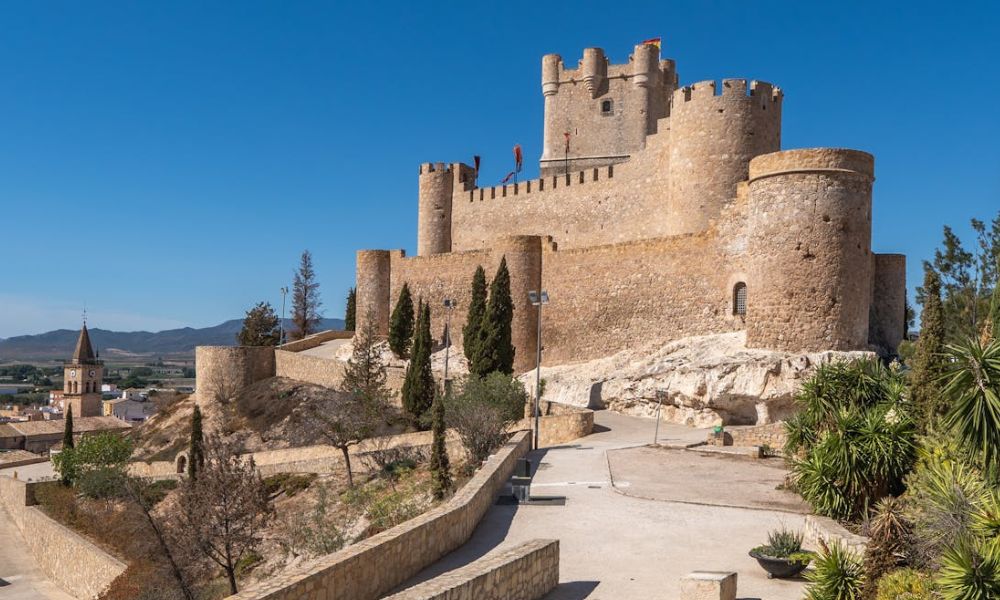
Castillo de la Atalaya (Villena) is the best-preserved castle, although it was built around the 12th century. At one time, it served as a key fortification on the border between Moorish and Christian territories. Its powerful towers and walls are still impressive today — in some places their thickness reaches 4 meters. Additional outer walls were added around the castle in the 15th century. The main 27-meter-high tower consists of four levels: the first two were built by the Arabs, and the upper ones by the Christians.
Opening hours: Tuesday–Sunday, 10:00–14:00 (morning) and 16:00–18:00 (evening). Closed on Mondays, Sunday evenings, and public holidays. The attraction can be visited with a guide or independently. Ticket prices: standard — €3, reduced — €1.50.
Castillo de la Atalaya
Castillo de Sax
Castillo de Sax is located on the very top of a rocky mountain. It represents a successful blend of Moorish and Christian architecture. This is a very beautiful, almost fairy-tale structure situated on a limestone ridge at an altitude of 500 meters above sea level. In the evenings, it is illuminated, which further emphasizes its unusual appearance.
It is open on Sundays: in the autumn-winter period from 11:00 to 12:00, and in the spring-summer period from 10:30 to 11:30. To visit this Alicante attraction on other days, you need to obtain permission from the local police station. They will give you the keys in exchange for an ID document. The most convenient way to get here from the city is by train from Alicante-Terminal station to Sax.
Castillo de Biar
Castillo de Biar is a castle from the Almohad era (approximately 12th century), notable for its massive tower and excellently preserved walls. It stands on a mountain peak at 750 meters above sea level. It was conquered by the Christians in 1245 and has been rebuilt many times since. Previously, the castle had great strategic importance as it was located in the border zone of the Catholic kingdoms. Since June 4, 1931, Biar Castle has held the status of a national monument. It has now been carefully restored, and its viewpoints offer stunning views.
Opening hours: Wednesday–Sunday from 10:15 to 13:45. Entry fee — €1 (children under 7 enter free).
The castle is located 47–50 km northwest of Alicante. The most convenient way to get there is by car via the A-31 / CM-80 / CM-799 motorway towards Biar. The journey takes about 50 minutes.
Guadalest Castle
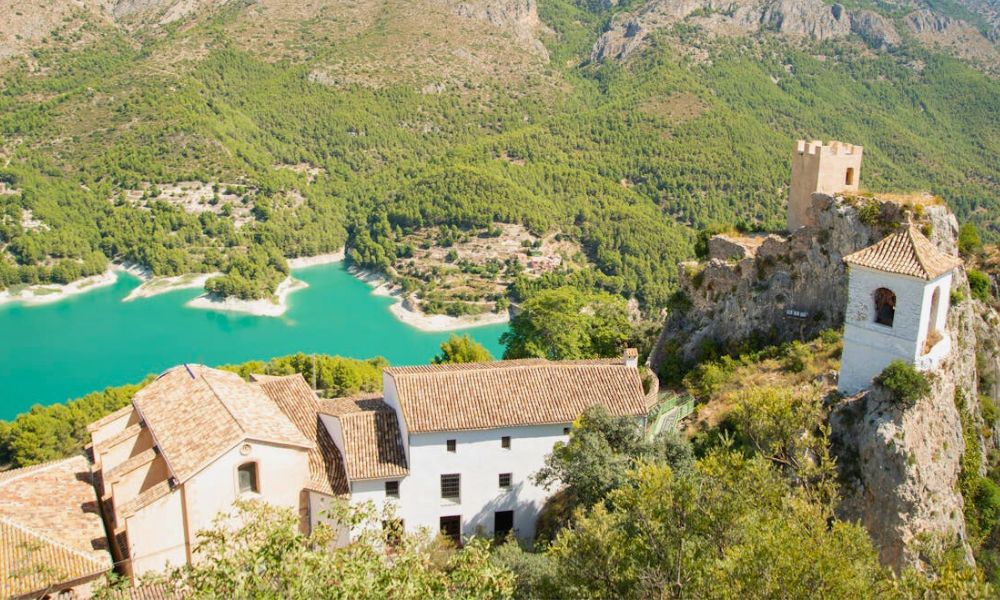
Guadalest Castle is located near the town of the same name, which is recognized as one of the most beautiful in Spain. It occupies a unique position on a rock above a valley with a reservoir. There are also many interesting Alicante museums nearby that are worth visiting as part of the route. The fortress was presumably built in the 11th century but was partially damaged by earthquakes in 1644 and 1748. The structures were also significantly destroyed in 1708 during military operations. Today, the castle mainly consists of ruins, towers, and fortress walls, which serve as an excellent observation platform for tourists, offering beautiful views of the Guadalest Reservoir (the azure lake) and the mountain ranges of Sierra de Aitana and Serrella.
Guadalest Castle
Entry to the castle ruins costs €4 for adults and €2 for children. The most convenient way to get here from Alicante is by car — about 55 minutes (60 km) via the CV-70 / CV-755 roads. Please note that parking near the village is paid.
Castles and fortresses of Alicante should definitely be included in your travel itinerary, as this is not only a way to get to know the history and architecture of the region better but also an opportunity to see it from unique viewpoints.